
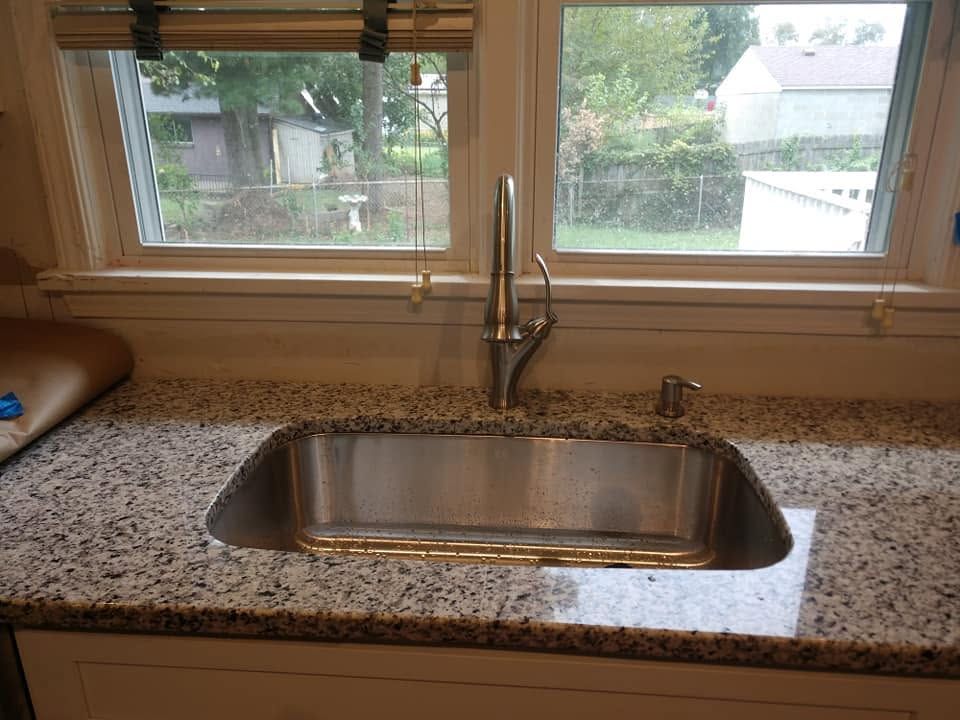
Fixtures That Seal Properly and Drain Completely
Faucet & Sink Repair in the Louisville area for dripping fixtures, slow drainage, and worn components
Dripping faucets waste thousands of gallons annually while causing stains and raising water bills, and clogs turn sinks unusable until cleared. CLMS Plumbing repairs faucets and sinks for bathrooms, laundry rooms, and utility areas, restoring proper sealing and drainage. You notice these problems when basins take minutes to empty, faucet handles require excessive force to turn, or steady dripping persists regardless of how tightly you close the valve.
Repair work addresses specific failure points: replacing cartridges inside single-handle faucets when mixing valves stick, installing new compression washers where traditional stem faucets leak, clearing P-traps filled with hair and soap residue, and re-seating drain assemblies that no longer hold standing water. Each sink configuration presents different access challenges, and older fixtures sometimes require adapting modern parts to legacy mounting systems.
Request an inspection to evaluate fixture condition and identify needed repairs in Louisville, St. Matthews, Prospect, and surrounding areas.
What Proper Faucet and Sink Repairs Require
Effective faucet repair starts with shutting off supply lines and disassembling valve bodies to inspect sealing surfaces for scoring, mineral deposits, or worn elastomer components. Cartridge replacement requires matching exact manufacturer specifications because dimensional differences of even a few millimeters prevent proper seating. Sink clogs get cleared by removing trap assemblies entirely, not just forcing chemical drain cleaners through, which allows inspection for cracks, corrosion, or improper venting that causes recurring blockages.
Once repairs finish, faucets turn smoothly through their full range of motion and stop water flow completely in the closed position without any residual seepage. Sinks empty in seconds as water spirals down drains without backing up or gurgling. Basin surfaces stay dry underneath because supply connections and drain seals no longer weep. Handles operate with consistent resistance rather than sticking partway through rotation, and water temperature responds predictably to adjustments.
Some repairs include updating aerators to improve flow patterns and reduce splashing, adjusting pop-up drain linkages so stoppers seal properly against basin openings, and tightening mounting hardware that's loosened over years of use. Stainless steel and cast iron sinks develop different wear patterns than porcelain or composite materials, affecting which repairs make sense versus full fixture replacement.
Common Questions About Fixture Repairs
Homeowners typically want to understand what causes fixture failures and how repairs prevent ongoing problems.
Why do kitchen faucets fail more frequently than bathroom fixtures?
Kitchen faucets operate under higher usage frequency, exposure to food particles and grease that accelerate seal deterioration, and greater temperature cycling between hot and cold that expands and contracts internal components repeatedly.
What causes sinks to drain slowly even after clearing visible clogs?
Slow drainage often results from biofilm buildup coating the inside of drain pipes, improper venting that prevents air from replacing draining water, or partial obstructions lodged further down the waste line beyond the P-trap.
How do you determine whether to repair or replace a leaking faucet?
Replacement becomes necessary when the faucet body itself cracks, when corrosion damages valve seats beyond resurfacing, or when parts for discontinued models are unavailable, but worn cartridges and seals are routinely repairable.
What sink materials hold up best in Louisville's water conditions?
Stainless steel resists mineral staining better than porcelain in areas with hard water, while composite granite sinks avoid the chipping issues that affect cast iron under impact, though all materials perform well with proper maintenance.
When should supply lines connected to faucets be replaced during repairs?
Braided stainless supply lines should be replaced every eight to ten years regardless of visible condition because internal rubber hoses degrade over time, and replacement during faucet repairs avoids future leak risks.
CLMS Plumbing carries replacement parts for most major fixture brands and can source components for older installations. Arrange a repair appointment to restore reliable operation and stop water waste from failing fixtures.