Repairs That Stop Running and Restore Flushing
Toilet Repair in Louisville and surrounding areas for continuous running, weak flushing, and component failures
A running toilet wastes up to 200 gallons daily when the flapper fails to seal or the fill valve doesn't shut off properly. Weak flushing leaves bowls incompletely cleared, requiring multiple cycles that defeat any efficiency gains. CLMS Plumbing repairs residential toilets in Louisville, Bon Air, Middletown, and neighboring communities, addressing internal mechanism failures, leaks at tank connections, and flushing problems that disrupt household routines and increase water bills unnecessarily.
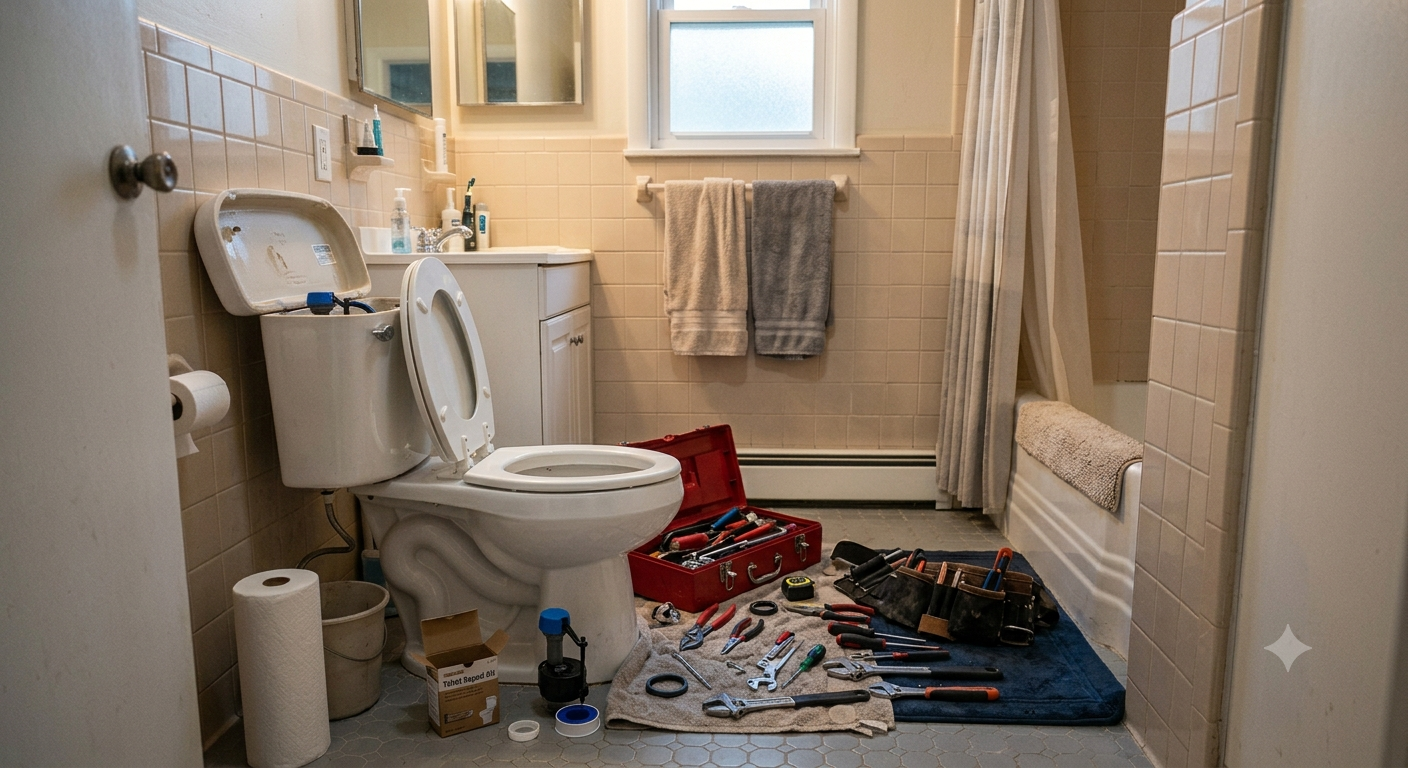
Repair involves testing which component has failed: flappers that have hardened and no longer seat against the flush valve opening, fill valves with worn washers that allow continuous trickling into tanks, or flush handles with corroded linkages that don't lift flappers completely. Each part affects how the toilet cycles through flushing and refilling, and replacing one component often reveals adjustments needed elsewhere to restore proper timing and water levels.
Book repair service to stop water waste and restore dependable toilet operation.
What Changes After Toilet Repairs Complete
Accurate diagnosis separates symptoms from causes. Continuous running might result from flapper deterioration, incorrect float adjustment, or debris on the flush valve seat preventing sealing. Weak flushing can stem from clogged rim jets, insufficient tank water levels, or partially blocked trap passages. CLMS Plumbing tests each component systematically, checking flapper flexibility, measuring refill rates, inspecting overflow tube positioning, and verifying that chain length allows full flapper lift without creating slack that causes premature closure during flushing.
Once repairs finish, you hear the refill cycle stop completely within two minutes of flushing, with no hissing or trickling afterward. The bowl clears entirely in one flush without requiring a second cycle or plunging. Water in the tank remains at a consistent level without slowly dropping, which would indicate ongoing leakage past the flapper. Handle operation requires normal pressure rather than excessive force or repeated jiggling to trigger flushing. These changes confirm that seals hold properly, valves close completely, and mechanical linkages move through their full range without binding.
Some repairs include upgrading from older ballcock-style fill valves to modern float-cup designs that refill faster and adjust more precisely, or installing adjustable flappers that compensate for variations in flush valve dimensions across different toilet brands. Hard water common in some Louisville areas causes mineral buildup inside fill valves and on flapper seating surfaces, accelerating wear and requiring more frequent component replacement compared to soft water environments.
What Homeowners Want to Know About Repairs
Questions about repair needs, component life, and prevention strategies come up regularly during service appointments and initial consultations.
What causes toilets to run continuously hours after flushing?
Continuous running happens when the flapper doesn't seal against the flush valve seat due to mineral deposits, chain interference, or deteriorated rubber that no longer flexes enough to form a watertight closure.
How do you fix toilets that require holding the handle down to complete flushing?
Incomplete flushing with handle-holding typically means the flapper closes too quickly because the chain has excess slack or the flapper itself has lost buoyancy, requiring handle pressure to keep the flush valve open long enough to clear the bowl.
When do internal toilet components need replacement versus simple adjustment?
Flappers and fill valve washers should be replaced when rubber shows hardening, cracking, or mineral encrustation because these materials don't restore elasticity, while float adjustments and chain length modifications can resolve issues without parts replacement.
Why do some toilets develop weak flushing gradually over months or years?
Gradual flushing weakness usually results from mineral deposits clogging the rim jets that direct water around the bowl perimeter during flushing, reducing the velocity and volume needed for complete waste removal.
What indicates a toilet problem serious enough to require immediate repair?
Call for prompt service when you notice water pooling around the base, which indicates wax ring failure and potential subfloor damage, or when multiple flushes consistently fail to clear the bowl despite plunging attempts.
CLMS Plumbing responds quickly to minimize water waste and restore normal toilet function. Reach out to schedule repairs that address specific component failures affecting your household fixtures.